The Ready Framework
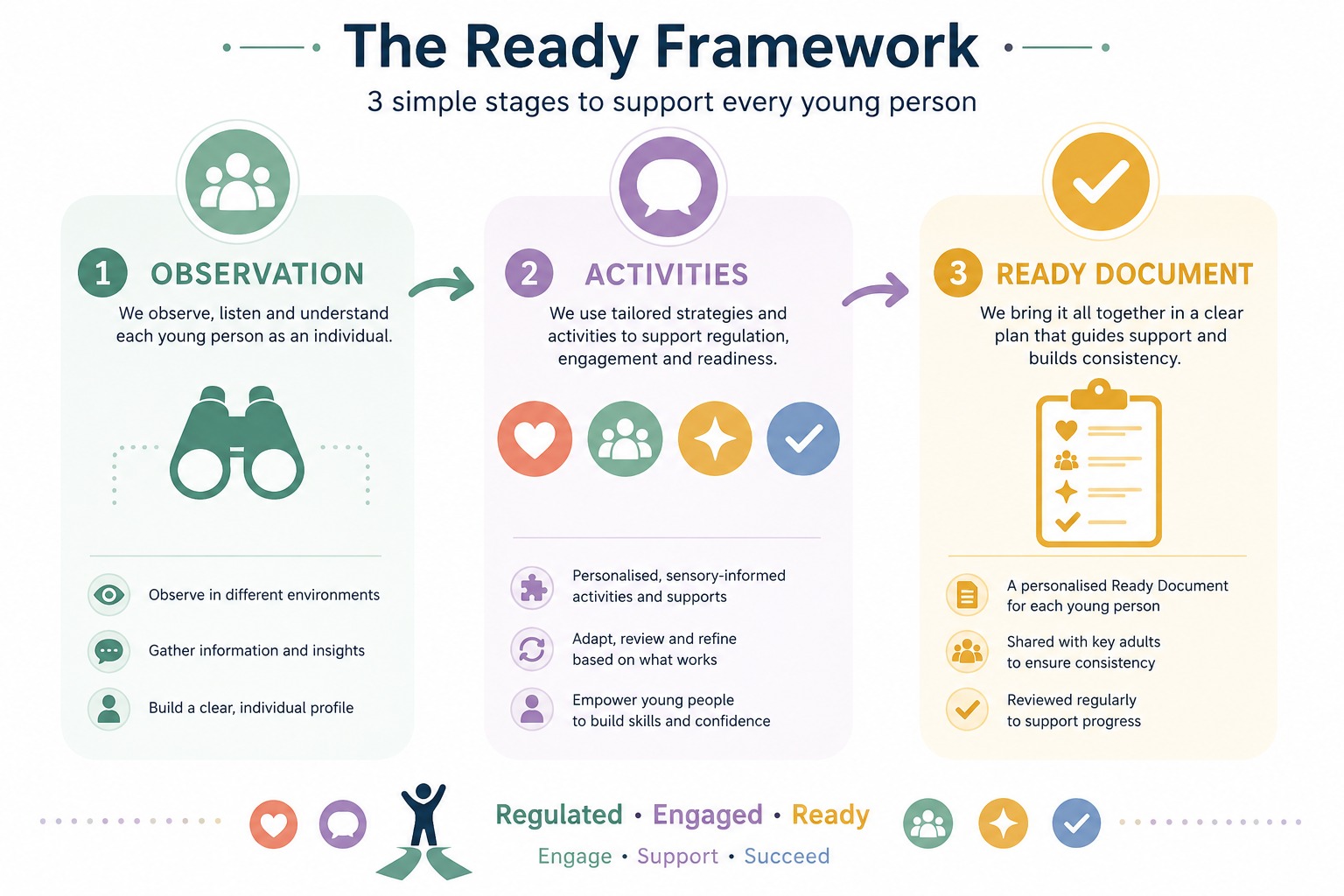
The Ready Framework supports young people to become regulated, engaged and ready to learn. We recognise that every young person experiences sensory input differently, and our approach is individualised, responsive and shaped by each young person’s needs. The Ready Framework is delivered through three structured stages to ensure support is consistent, purposeful and transferable beyond our provision.
The Ready offer is not an Occupational Therapy (OT) service and does not produce formal OT or sensory integration reports. However, we are aware that many of our young people have not had access to specialist OT support. In response, we have developed a structured sensory offer that is transferable across education platforms to enhance sensory regulation and engagement as effectively as possible.
The Ready Framework is informed by observation, evidence-based practice and ongoing review, but it does not replace specialist OT assessment or intervention. Where a young person’s needs indicate that further specialist support would be beneficial, we continue to advocate for appropriate referrals and external services.
For young people that have received OT input, we can use stages two and three of our sensory journeys to interpret and apply OT recommendations in a practical and meaningful way. This ensures strategies, sensory circuits and reasonable adjustments are embedded consistently across all education environments, supporting regulation, engagement and progress.
This approach allows us to make tailored sensory support more accessible for all young people, while remaining clear about the boundaries of our role and the importance of specialist services.
Stage 1: Sensory Profiling and understanding our young people
The first stage of our sensory journey focuses on getting to know each young person as an individual. Through careful observation, interaction and recording, we develop a detailed sensory profile that captures how the young person processes sensory information. During this stage, we introduce a range of sensory activities to identify whether the student is sensory seeking or sensory avoiding across different sensory systems. We observe and document how the student presents behaviourally before, during and after activities, allowing us to build a clear picture of their sensory needs, triggers and preferences.
Stage 2: Sensory Circuits and Regulation Strategies
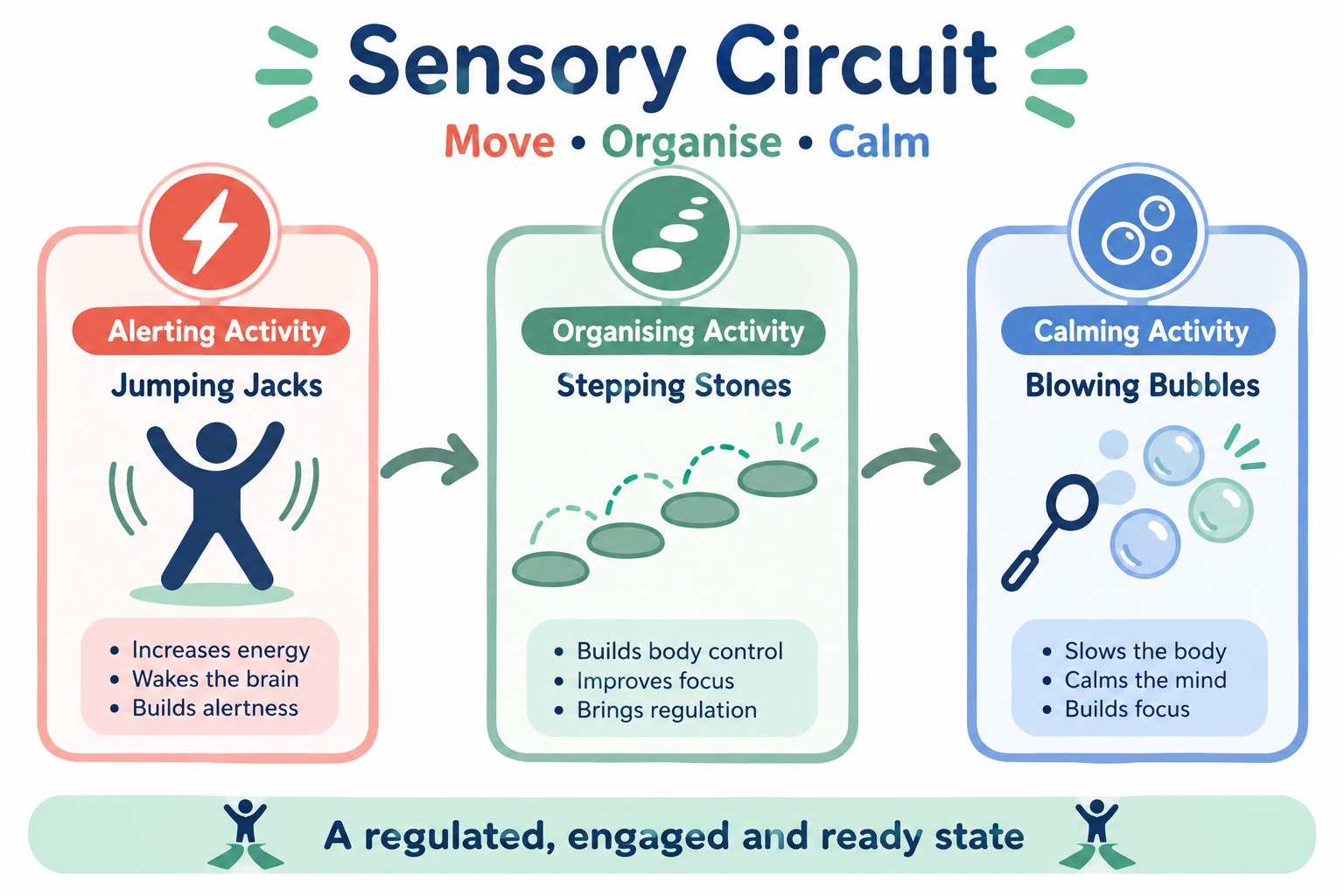
Once a young person’s sensory profile has been established, we move on to identifying which activities are alerting, organising and calming for that individual. These activities are then used to create personalised sensory circuits where appropriate. Sensory circuits and targeted strategies are implemented to support during key points of the day, such as transitions, session starts and endings, or periods of increased demand. Proprioceptive input, including heavy work activities, are used regularly where appropriate to support regulation and maintain an optimal level of engagement throughout sessions. Strategies are continually reviewed to ensure they remain effective and meaningful.
Stage 3: The Ready document
When stages one and two show consistent progress and positive outcomes, we move into stage three, which focuses on transition and future planning. This includes the completion of a transition and observation document that outlines the young person’s individual sensory needs in detail. The document records sensory seeking and avoiding behaviours, successful supports and strategies, reasonable adjustments within education, other settings, and any sensory circuits or breaks that support regulation. This information can inform current practice for our young people and can move with them to their next placement, such as school, college, work or any other setting, to promote continuity, understanding and a successful transition.
Through this three-stage sensory journey, The Ready Framework aims to empower our young people, reduce barriers to learning and provide professionals and settings with the tools needed to support individual sensory regulation and long-term success.